RON NAGLE
Ode to a Grecian Formula
Melas Martinos
Krazy beholds a dormouse, a little mouse with a huge door. It impresses him as being terrible that “a mice so small, so dellikit” should carry around a door so heavy with weight. (At this point their Odyssey begins; they use the door to cross a chasm.) “A door is so useless without a house is hitched to it.” (It changes into a raft and they go down stream.) “It has no ikkinomikil value.” (They dine off the door.) “It lecks the werra werra essentials of helpfilniss.” (It shelters them from a hailstorm.) “Historically it is all wrong and misleading.” (It fends the lightning.) “As a thing of beauty it fails in every rispeck.”
Gilbert Seldes, ‘The Krazy Kat That Walks by Himself’, The Seven Lively Arts ,1924
Along with artists like Giorgio Morandi, Philip Guston, Cy Twombly and Ken Price, Ron Nagle has often cited George Herriman as part of the backbone of his influences. One of the first cartoonists and creator of Krazy Kat, the Greek —a nickname given to him due to the dark shade of his skin and a lifelong concealment of his mixed-race ancestry— would often draw his characters against a backdrop that resembled his beloved Monument Valley in Arizona, a place he would often spend long stretches of time in. The image of
this landscape —a vast expanse of ochre delineated by an endless horizon dotted with giant boulders— would soon become popularized through the cinematic lens of John
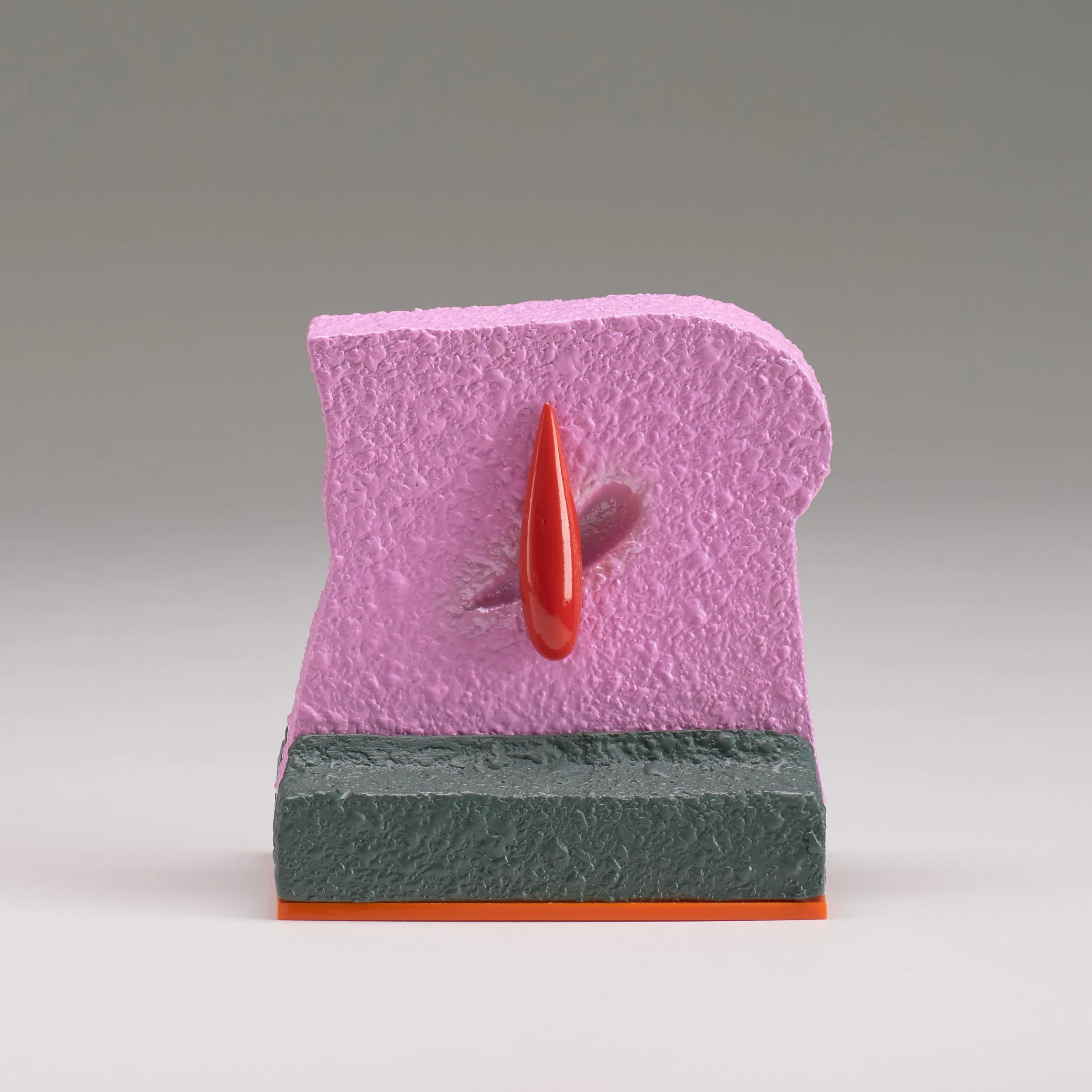
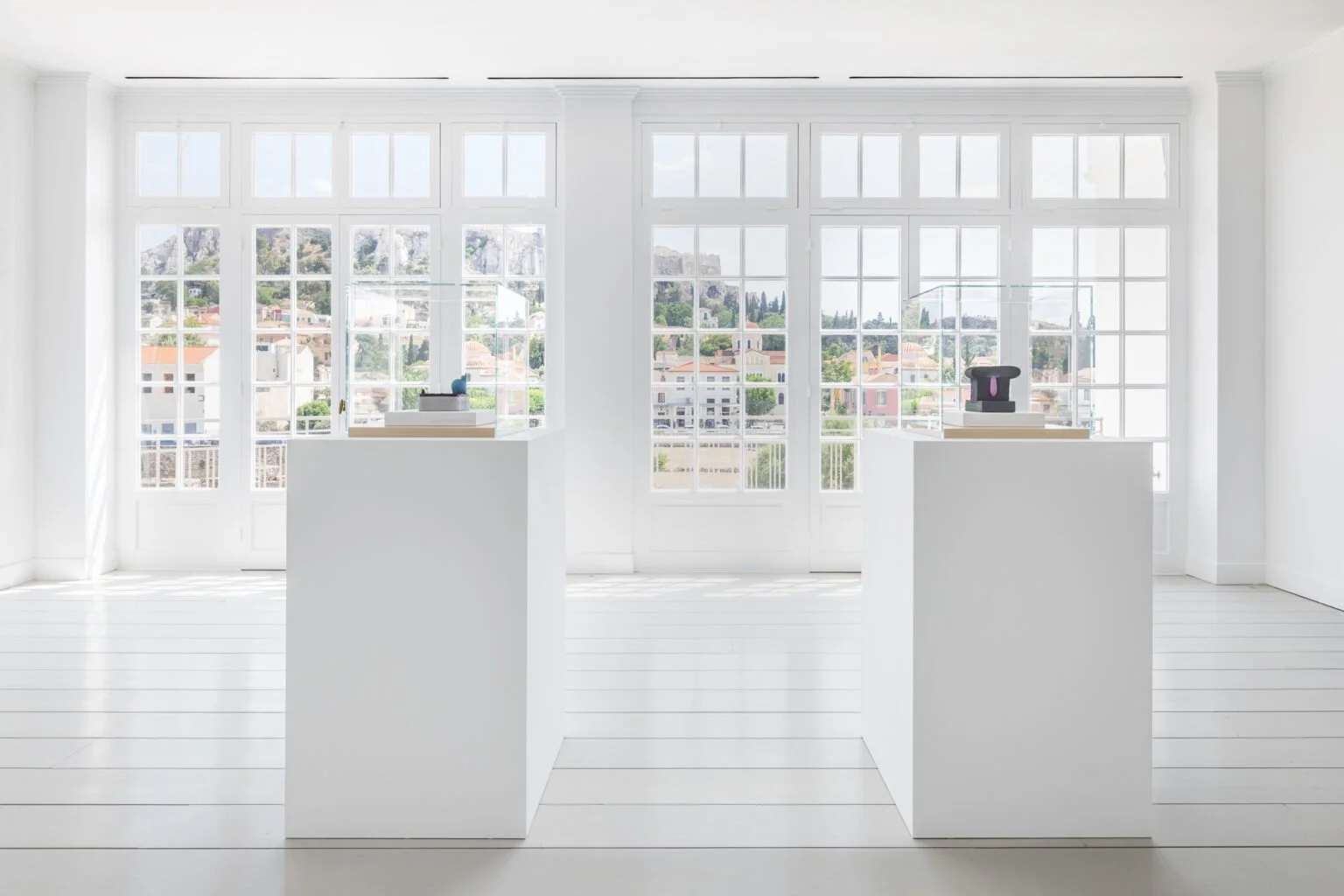
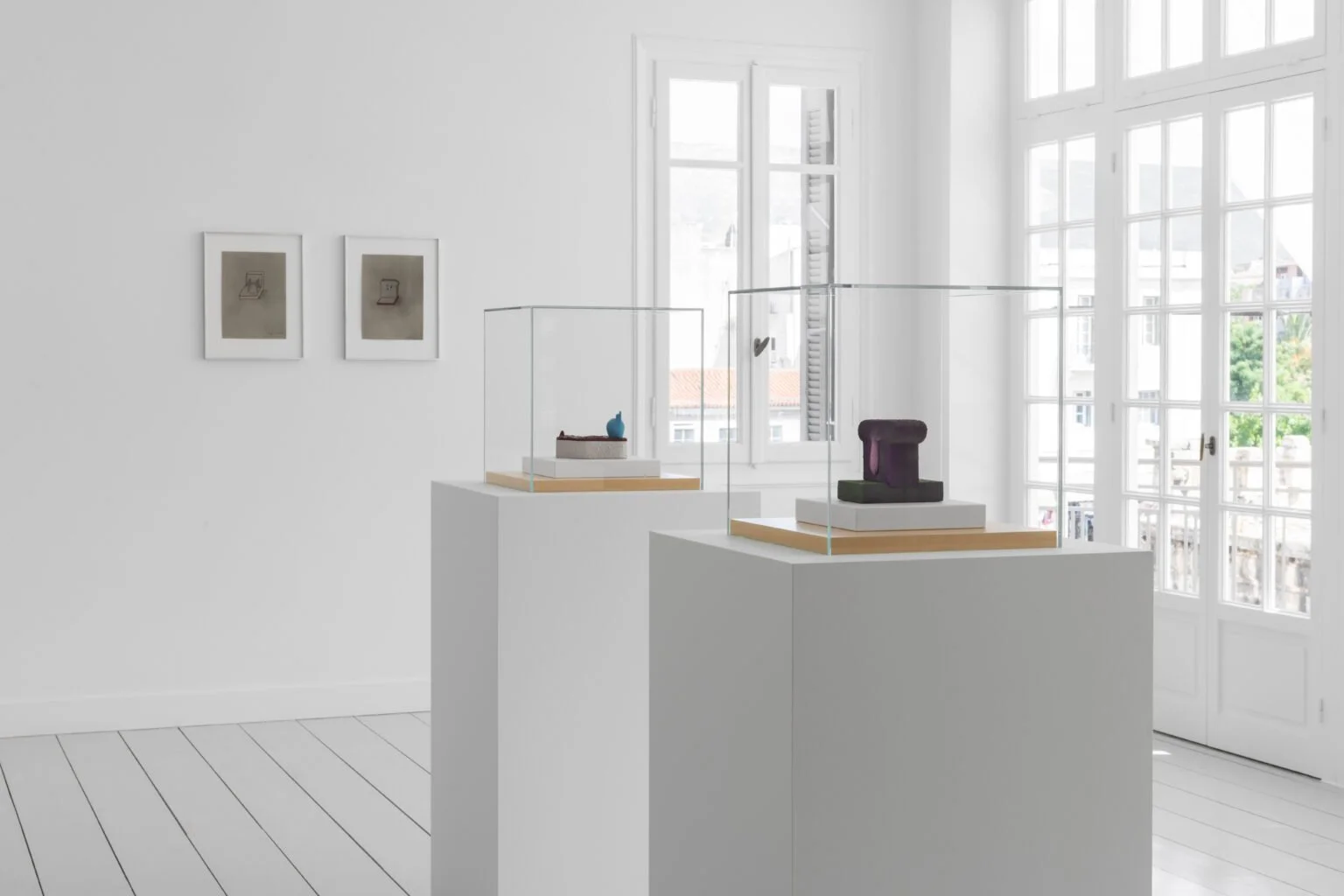
Ford and come to dominate the collective imagination as emblematic representation of the American West. Ron Nagle’s works often appear like three-dimensional versions of these comic panels, mock-ups of sets where the stage itself performs the action. Consistently small-scale, they brim with condensed power and vibrancy like plants exposed to continuous sunlight. Monoliths emerging from vast valleys, barren limbs of Beckettian trees, a harsh shadow at midday; these are just some of the elements that his forms seem to allude to. Always fostering a twist, buttes suddenly lean towards the shape of a loaf of bread, tree branches to crustacean tentacles and a harsh midday shadow to a half-melted, terracotta-colored wax crayon tongue rolled out like dough. Using clay as primary material but also epoxy resin among others, architectural details and geometric solids make for a kind of marshmallow formalism. Deserted deserts and delectable desserts, the glossary becomes confectionery. Granular textures seem to glow from within like sugar coated fruit jellies while at other times, they resemble an extreme close-up of fluorescent moisture. An unlikely combination of glazed and painted surfaces is so densely three-dimensional that the eye almost registers them as flat.
In Jellineck, Foul Playmate, and Inscrutable Circumstance, sniffly male members protrude from forms resembling tombstones or slices of bread, while their stuccoed façades change colors like the stone volumes in the Arizona desert during sunset. Surrounding them like uprooted follicles of a pubic wreath, a few tiny holes offer salt shaker services. There is clearly no lack of humor in this linguistic jam. In a text written for Nagle, Ken Price calls him a sweetheart. Nagle in turn refers always to his late friend and early mentor as Kenny, no last name. It is hard not to feel warmth at the thought of this mutual and publicly expressed affection between these two rock ’n’ roll men. In a way, humor and tenderness may be among the few means one has to maintain a romantic outlook towards life if one wishes to live beyond a certain age and not turn into a caricature. Keats —whose famous poem is paraphrased in the title—identified his entire existence with the pursuit and worship of beauty, as only a fleeting spirit can bear to do. In his ode to the famous urn, he refers to a tongue doomed to thirst and a lover who is called upon to accept that unfulfilled pleasures will always remain superior. In the last published Krazy Kat strip, Herriman designs a lake wherein —after thirty years of equating love to being hit with a brick in the head— his eponymous hero quietly sinks. Turning the urn into a formula, Nagle looks again: at the cup whose form marked the beginning of his practice, at the palm as it bends to form a u, at this shape that holds the water, at this pursuit.